
Centripetal Drainage Pattern
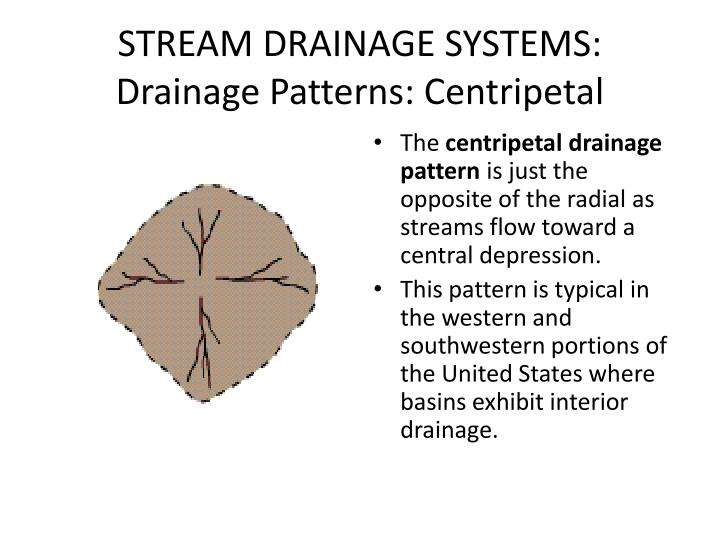
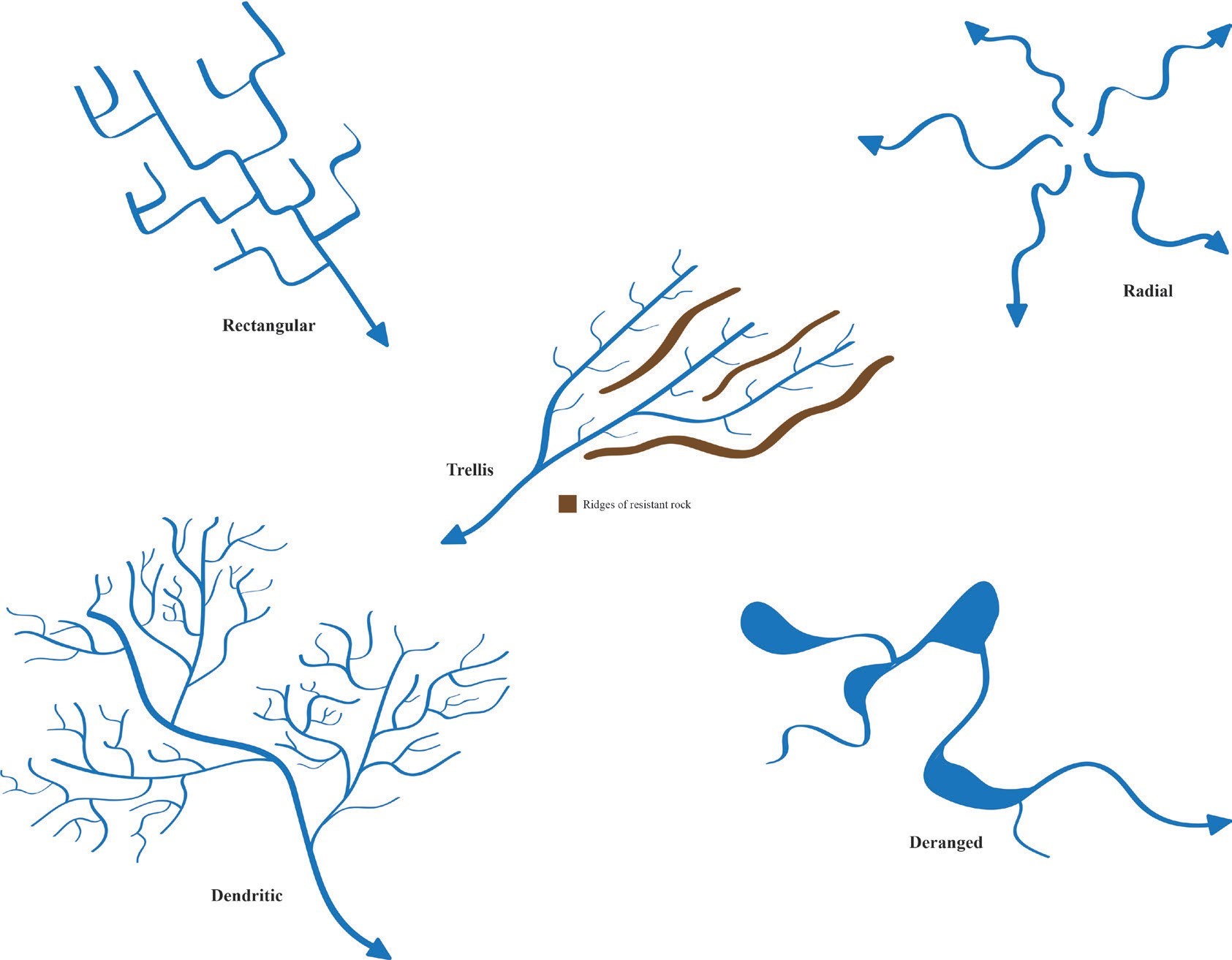
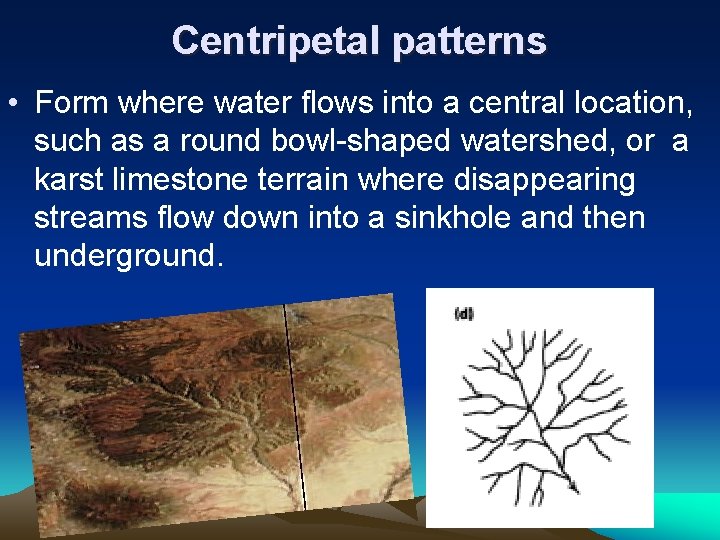
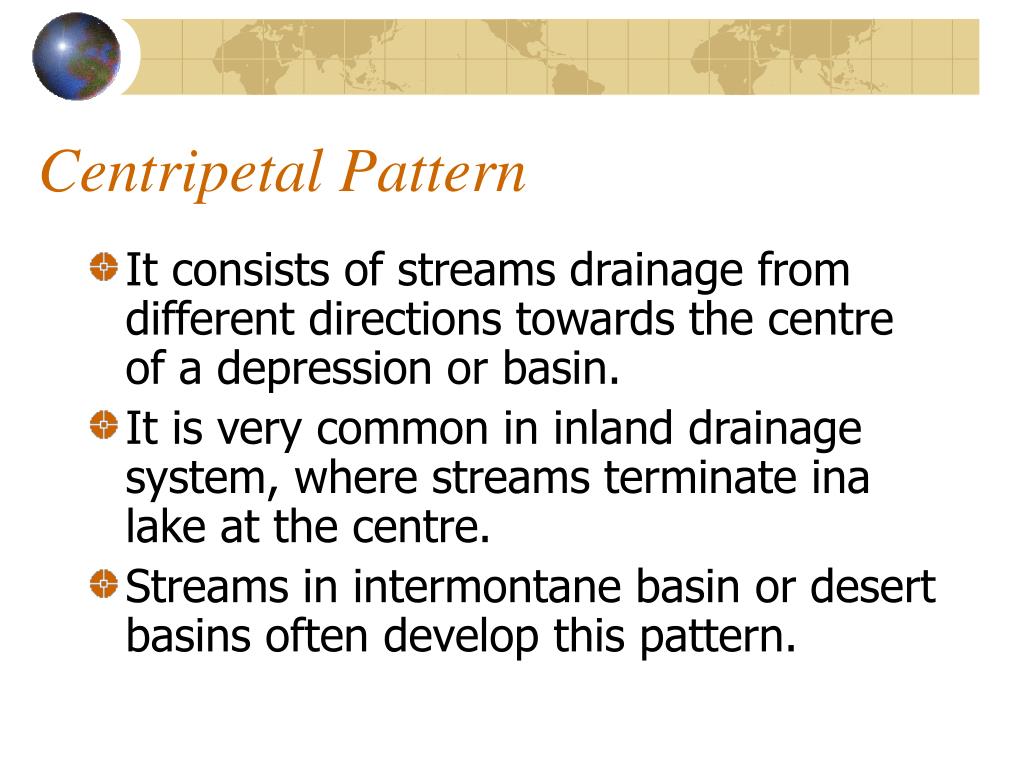
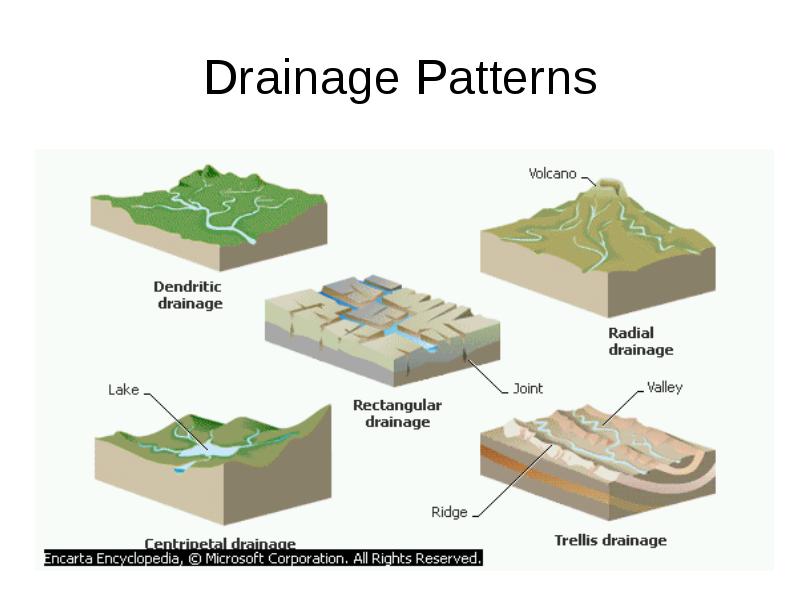
Centripetal Drainage Pattern - 17.11) is opposite to the radial drainage pattern because it is characterized by the streams which converge at a point which is generally a depression or a basin. Web centripetal patterns are produced where drainage converges on a single outlet or sink, as in some craters, eroded structural domes with weak cores, parts of some limestone country, and enclosed desert depressions. During wetter portions of the year, these streams feed ephe. Rivers converge towards a central basin, like in the thar desert. Distribution of stream courses and their spatial relationship to one another. Web in geomorphology, a drainage system is the pattern formed by the streams, rivers, and lakes in a particular drainage basin. It is mainly fed by four streams namely mendha, rupangarh, kharain and khandel. Sambhar basin has a centripetal drainage pattern as streams drain towards the lake. Stream flows towards a central depression. Web centripetal drainage pattern, also known as an endorheic drainage system, exhibits a distinct hydrological characteristic: Stream flows towards a central depression. Rivers converge towards a central basin, like in the thar desert. Streams of ladakh, tibet, and the baghmati and its tributaries in nepal. It is just the opposite of the radial as streams flow toward a central depression. The streams produce a centripetal or inland drainage pattern when they converge at a place, which is usually a depression or basin. Sambhar basin has a centripetal drainage pattern as streams drain towards the lake. The centripetal pattern is noted in craters, calderas, structural basins and breached domes (relief inversion). Radial as streams flow toward a central depression. This pattern is typical in the western and southwestern portions of the united states where basins exhibit interior drainage. Riverine and fluvial networks converge towards a central depression instead of radiating outwards to join larger bodies of water like oceans or lakes. The three main types of drainage patterns are illustrated in figure 13.7. India’s four drainage patterns are: When rivers discharge their waters from all directions in a lake or depression, the pattern is known as ‘centripetal’. Web centripetal drainage pattern, also known as an endorheic drainage system, exhibits a distinct hydrological characteristic: Most river patterns evolve through natural selection. Web centripetal drainage pattern, also known as an endorheic drainage system, exhibits a distinct hydrological characteristic: The three main types of drainage patterns are illustrated in figure \(\pageindex{4}\). Streams of ladakh, tibet, and the baghmati and its tributaries in nepal. During wetter portions of the year, these streams feed ephe. Drainage basin morphometry can be quantified by several parameters, including: Radial as streams flow toward a central depression. This pattern is typical in the western and southwestern portions of the. Streams of ladakh, tibet, and the baghmati and its tributaries in nepal. These streams feed ephemeral lakes that evaporate during dry spells throughout the wetter parts of the year. Web centripetal drainage pattern, also known as an endorheic drainage system,. Web drainage pattern refers to the pattern of the entire river network and should not be confused with channel pattern or form, which refers to limited reaches of channels or channel systems with more or less uniform morphological characteristics. Web in the radial outward pattern, drainage lines radiate out from a common center, while in the centripetal or radial inward. Web a parallel pattern sometimes indicates the presence of a major fault that cuts across an area of steeply folded bedrock. Web in geomorphology, a drainage system is the pattern formed by the streams, rivers, and lakes in a particular drainage basin. Web in geomorphology, drainage systems, also known as river systems, are the patterns formed by the streams, rivers,. Web the pattern of tributaries within a drainage basin depends largely on the type of rock beneath, and on structures within that rock (folds, fractures, faults, etc.). Web the centripetal drainage pattern is just the opposite of the radial as streams flow toward a central depression. When rivers discharge their waters from all directions in a lake or depression, the. Web centripetal patterns are produced where drainage converges on a single outlet or sink, as in some craters, eroded structural domes with weak cores, parts of some limestone country, and enclosed desert depressions. Web centripetal drainage pattern: Web in the radial outward pattern, drainage lines radiate out from a common center, while in the centripetal or radial inward type, streams. Streams diverge from a central elevated tract: These streams feed ephemeral lakes that evaporate during dry spells throughout the wetter parts of the year. Centripetal or inland drainage pattern (fig. Rivers radiate outward from a central peak, seen in the deccan plateau. The centripetal pattern is noted in craters, calderas, structural basins and breached domes (relief inversion). It is similar to the radial drainage system, with the only exception that radial drainage flows out where as the centripetal drainage flows in. Web centripetal drainage pattern. Web centripetal drainage pattern, also known as an endorheic drainage system, exhibits a distinct hydrological characteristic: Drainage basin morphometry can be quantified by several parameters, including: Web the rectangular drainage pattern is. During wetter portions of the year, these streams feed ephemeral lakes, which evaporate away during dry periods. Drainage lines converge into a central depression, like a sinkhole, crater, or other basin. Riverine and fluvial networks converge towards a central depression instead of radiating outwards to join larger bodies of water like oceans or lakes. It is similar to the radial. Web in geomorphology, a drainage system is the pattern formed by the streams, rivers, and lakes in a particular drainage basin. Domes, volcanic cones, isolated conical hills. Web centripetal drainage pattern: India’s four drainage patterns are: Web a parallel pattern sometimes indicates the presence of a major fault that cuts across an area of steeply folded bedrock. Stream flows towards a central depression. Web in the radial outward pattern, drainage lines radiate out from a common center, while in the centripetal or radial inward type, streams flow into a common center from circular basin walls. Drainage lines converge into a central depression, like a sinkhole, crater, or other basin. Web the centripetal drainage pattern is just the opposite of the radial as streams flow toward a central depression. During wetter portions of the year, these streams feed ephemeral lakes, which evaporate away during dry periods. The three main types of drainage patterns are illustrated in figure 13.7. Sambhar basin has a centripetal drainage pattern as streams drain towards the lake. Web centripetal patterns are produced where drainage converges on a single outlet or sink, as in some craters, eroded structural domes with weak cores, parts of some limestone country, and enclosed desert depressions. Radial as streams flow toward a central depression. Centripetal or inland drainage pattern (fig. Drainage pattern which looks like tree branches is known as dendritic drainage pattern.
Centripetal Drainage Pattern
PPT DYNAMIC EARTH’S FRESH WATERS PowerPoint Presentation ID

अपकेंद्रीय ( रेडियल) और अभिकेंद्री (सेंट्रिपेटल ) अपवाह प्रारूप के बीच

Centripetal Drainage Pattern
Overview of Water Introductory Physical Geology Laboratory Manual
Structural Control of Landforms Mostly Chapter 12 Plus

River & Drainage Patterns Types Of Drainage Facts

Distinction between centripetal drainage of the dome flank system
PPT Drainage Basin PowerPoint Presentation, free download ID6398776
The Water Cycle The Longitudinal Profile
The Centripetal Pattern Is Noted In Craters, Calderas, Structural Basins And Breached Domes (Relief Inversion).
It Is Similar To The Radial Drainage System, With The Only Exception That Radial Drainage Flows Out Where As The Centripetal Drainage Flows In.
They Are Governed By The Topography Of Land, Whether A Particular Region Is Dominated By Hard Or Soft Rocks, And The Gradient Of The Land.
It Is Just The Opposite Of The Radial As Streams Flow Toward A Central Depression.
Related Post: